
 See Our Latest Article on HelloNation
What are mobility exercises, and who can use them?
For residents of Stony Point, NY, simple mobility exercises can make everyday movement feel more comfortable and controlled. Mobility work uses gentle, active movements to help joints move through a useful range, while flexibility exercises more often involve holding a muscle in a stretched position.
Mobility exercises may be helpful for adults who spend long hours sitting, drive regularly, do household work, garden, walk, exercise, or notice stiffness after waking. They are not meant to force a joint farther than it can comfortably move. The goal is relaxed, repeatable motion.
A short routine can be done at home with a sturdy chair, a wall, and enough floor space to move safely. Consistency matters more than intensity. Five to ten minutes most days may be more useful than a demanding routine performed occasionally.
How should you prepare before moving?
Begin with two to five minutes of gentle activity if your body feels stiff. Walk around the room, march slowly in place, or move your arms in a relaxed manner. Warm muscles and joints generally move more comfortably than cold, still tissues.
Choose a clear area without loose rugs, clutter, or slippery flooring. This is especially useful during colder months, when damp shoes, tracked-in moisture, or winter footwear can make indoor surfaces less stable.
Use slow breathing throughout the routine. A mild pulling sensation or mild stiffness is acceptable, but sharp pain, catching, numbness, tingling, or sudden weakness is a reason to stop.
Which exercises can improve neck and upper-back mobility?
Seated neck turns
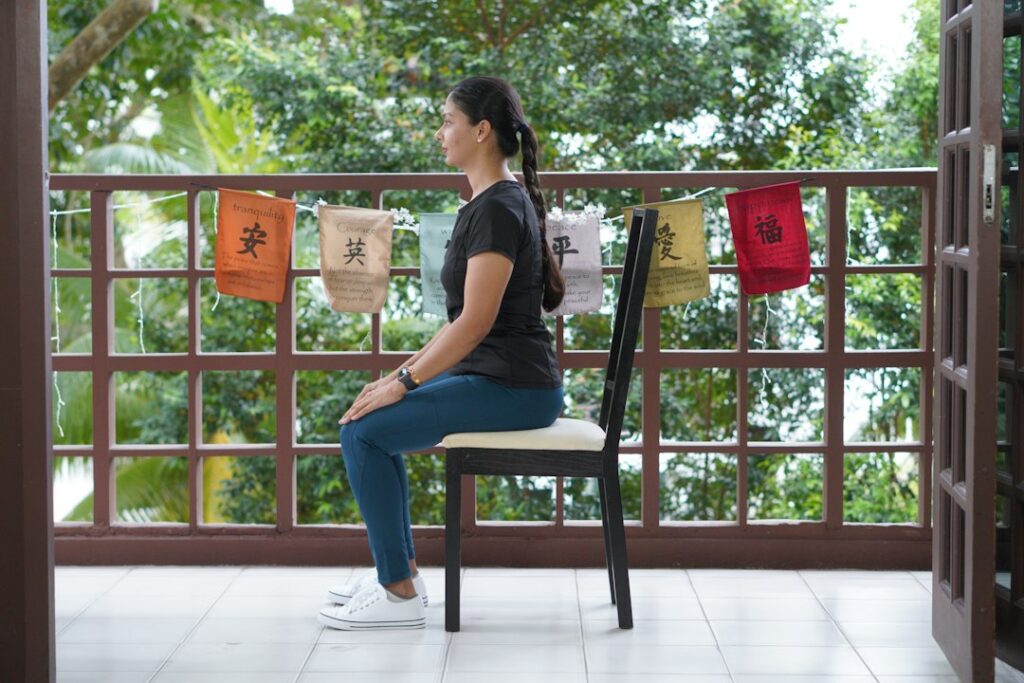
Sit upright with both feet supported. Keep your shoulders relaxed and slowly turn your head to the left until you feel a comfortable limit. Return to center, then turn to the right.
- Perform 3 to 5 repetitions per side.
- Keep the movement smooth rather than trying to look as far behind you as possible.
- Do not circle the head forcefully or drop it backward.
This movement can be useful after reading, computer work, driving, or other activities that keep the head facing forward.
Shoulder rolls
Lift the shoulders gently toward the ears, move them backward, then lower them. Reverse the direction after several repetitions.
Perform 5 to 10 slow circles in each direction. Keep the neck relaxed and avoid shrugging with force.
Wall angels
Stand with your back near a wall, but do not force every part of the body to touch it. Place the arms in a comfortable “goalpost” position, then slowly slide them upward and downward.
Move only through the range that feels controlled. If the shoulders pinch, reduce the height of the arms or use simple shoulder rolls instead.
What movements help the spine and hips?
Seated trunk rotations
Sit near the front of a sturdy chair with feet flat. Cross the arms over the chest or place the hands lightly on the thighs. Turn the chest to one side without lifting the hips, return to center, and repeat on the other side.
Complete 5 repetitions per side. The movement should come from the upper body and trunk rather than from pulling on the neck.
Pelvic tilts
Lie on your back with knees bent and feet on the floor. Gently tighten the abdominal muscles and flatten the lower back toward the floor. Hold for two or three seconds, then relax into a neutral position.
Repeat 8 to 10 times. This is a small movement, not a forceful pressing action. A folded towel under the head may make the position more comfortable.
Hip marching
Sit upright in a chair and slowly lift one knee a few inches, then lower it. Alternate sides. Keep the torso steady rather than leaning backward.
Perform 8 to 12 repetitions per side. This active movement can help reduce the feeling of stiffness that develops after sitting.
Which exercises can help the legs and ankles?
Sit-to-stand practice
Use a stable chair placed against a wall if needed. Sit with feet about hip-width apart. Lean the chest slightly forward, press through the feet, and stand. Slowly lower back down.
Begin with 5 repetitions. Use the hands on the chair arms or thighs for support if necessary, but avoid dropping into the seat.

This movement combines hip, knee, and ankle motion and reflects activities such as getting up from a dining chair or rising from a couch.
Calf and ankle mobility
Stand facing a wall with hands lightly supported. Keep one heel on the floor while bending and straightening the opposite knee, then switch sides. Another option is to slowly lift the heels and lower them with control.
Perform 8 to 12 repetitions. Avoid bouncing, especially if the calves or Achilles tendons feel tight.
Supported hip hinge
Stand with feet hip-width apart and hands on the thighs. Bend slightly at the hips by moving the hips backward while keeping the spine long. Return to standing by pressing through the feet.
Practice 6 to 8 repetitions. This teaches the hips to share movement during lifting and reaching instead of placing all the motion in the lower back.
How often should a home mobility routine be done?
A gentle mobility routine can be performed daily or at least several times per week. Start with one round of each exercise and increase gradually if the movements remain comfortable.
A useful schedule might include:
- Neck turns, shoulder rolls, and ankle movements during a work break
- Hip marching and sit-to-stand practice in the afternoon
- Gentle trunk or hip movements after a walk
- Light stretching after the body is warm, rather than immediately after prolonged inactivity
Mobility exercises work best alongside regular walking, basic strength work, and changes in position throughout the day. Remaining in one posture for hours can leave the body stiff even when a person exercises regularly.
Should mobility exercises hurt?
No. Mild tension, stiffness, or effort can be normal, but pain should not be pushed through. Stop and reassess if symptoms become sharp, travel down an arm or leg, cause numbness or tingling, affect balance, or continue to worsen after the routine.
Extra caution is appropriate after a recent injury, surgery, fall, or significant change in symptoms. People with osteoporosis, inflammatory joint conditions, neurological symptoms, or known spinal problems may need individualized guidance before starting unfamiliar movements.
Urgent medical evaluation is appropriate for sudden weakness, loss of bladder or bowel control, severe pain after trauma, chest pain, or new difficulty walking.
How can residents make the routine easier to maintain?
Link the exercises to an existing habit, such as getting up after breakfast, taking a break from desk work, or changing clothes after returning home. Keep the routine short enough that it does not feel like a separate workout.
Use a chair for balance rather than practicing near a slippery surface. During icy or wet weather, indoor mobility work can provide a safer way to keep moving when outdoor walking conditions are poor. The objective is steady, comfortable movement that supports daily activities—not stretching as far as possible.
